
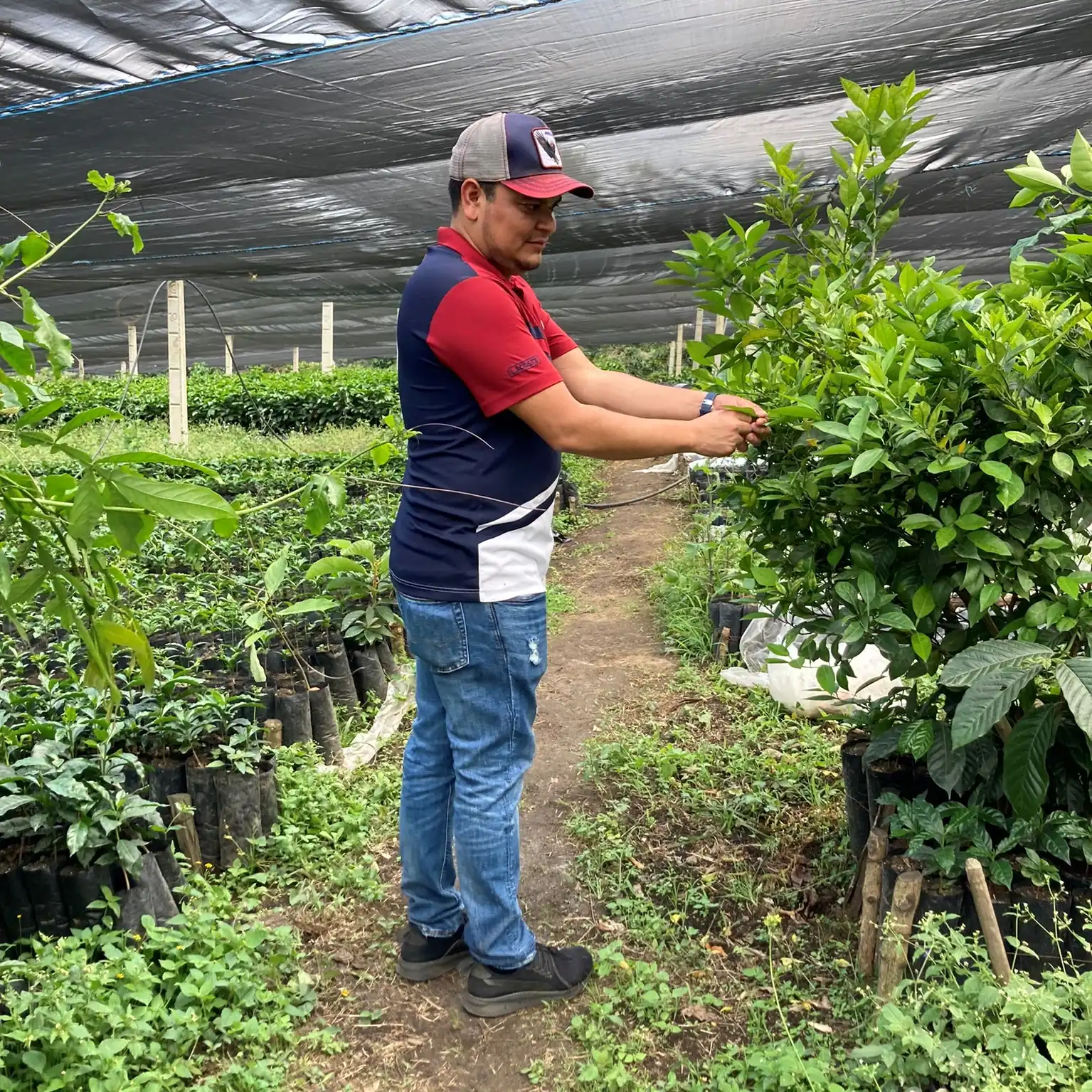
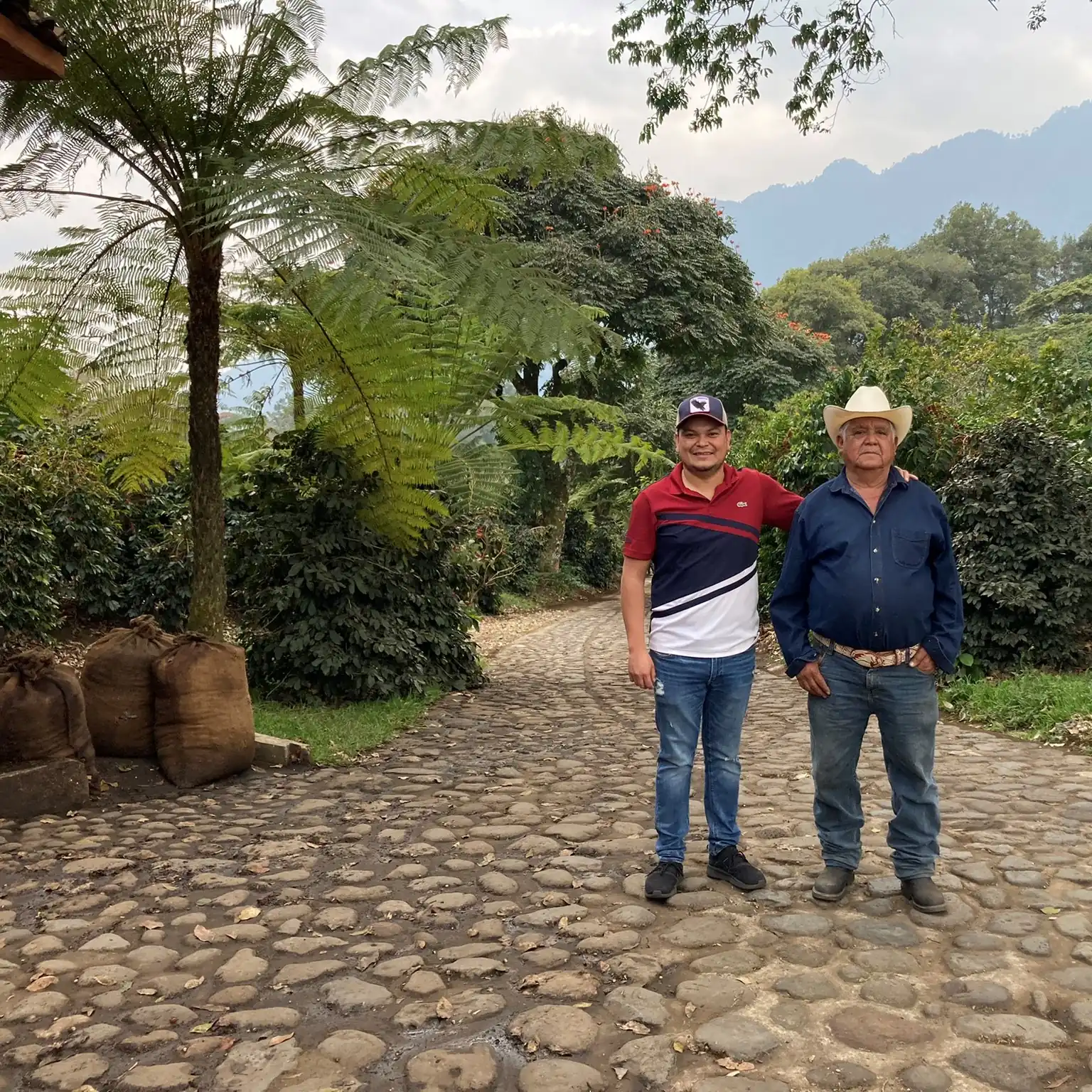
Carlos Cadena

CountryMexico
RegionCosautlán de Carvajal, Veracruz
FarmHuehuetepan
Altitude1 350 m
Size of the farm23 ha

“I represent the fifth generation of coffee growers in my family. In fact, it was my father who began to remake conventional commodity coffee farming in his own image and slowly began to transform the family farm. From replanting, to planting new varieties, to pruning the coffee trees. I didn’t get a glimpse into my parents’ coffee business until after I finished my bachelor’s degree, when I returned to the farm.


In 2012, I started participating in the Taza Excelencia Mexico competition, where I placed 6th. That was a big turning point for me and a new revolution came. We started researching varieties and experimenting with new processes. What followed was a thorough sorting and identification of all our fields and sorting the lots according to what processing suited what. We are still learning about coffee. I took one of the courses on coffee processing at Finca Chelín. As far as competing, we’re continuing with that and aiming higher. In 2023, I won 3rd place at the Cup of Excellence with a blend of Gesha and Pacamara.


My grandfather acquired the farm around 1950, then he died suddenly and my mother, who was very young, took over the reins. With my grandfather’s death came a lot of difficult situations. My mother took over the farm in its original state and continued the traditional way of farming. She kept the varieties already planted, such as Typica. When my parents got together, my father took over the family farming. I subsequently started separating the varieties and changing the coffee processing practices. I believe the Typica from this particular farm is very special and different because of its unique flavor profile. It is a very stable floral flavor that is both sweet and balanced.  Our farm is on the edge of a ravine, the soil is soft and airy, it also rains a lot and the ravine is surrounded by many trees such as Jinicuil and Pahua.”

About the coffee

Basically all of the lots of choice coffee we process, with a few exceptions, are processed naturally. We ferment some extra, and the fermentation is done in dark grey food-grade plastic containers that retain UV light. These containers also have a screw cap to ensure a hermetic closure, an AirLock valve and a key to drain the leachate. All coffees are sun-dried on African beds.


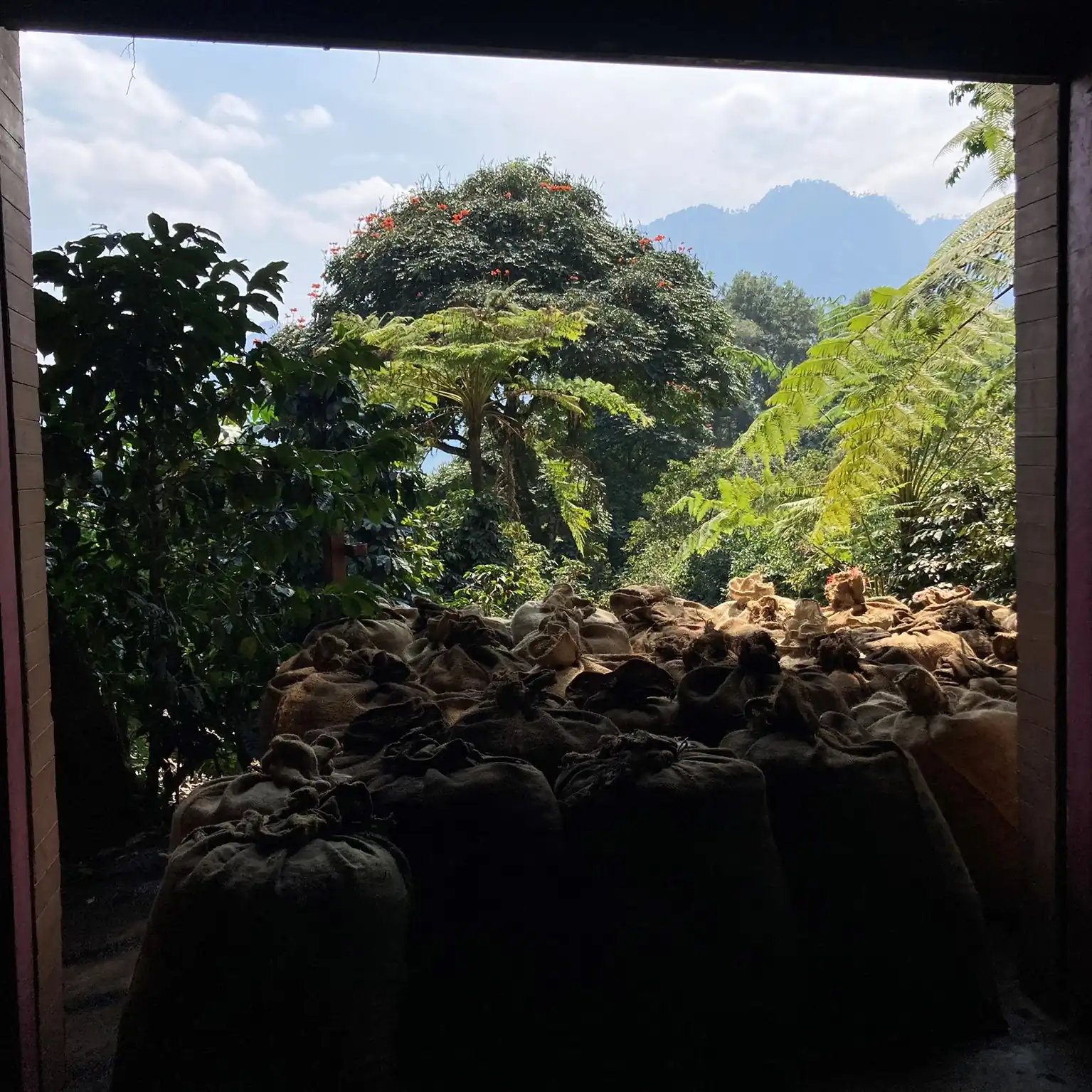
The process begins on the farm where the cherries are sorted and placed in storage for 24 hours, then moved 15km to a drying area where they are continuously rotated and turned over for 20 to 25 days to achieve even drying. After drying, they are moved to the warehouse where a sample is taken and stored in GrainPro and jute bags until the coffee is sold and transferred to the warehouse for export and subsequent sale.
MX-25-074 Carlos Cadena 7475

Lot 7475 is a honey-processed Mundo Maya variety from Finca Pocitos. The coffee is harvested at an optimal 26 degrees Brix and floated on the farm to remove impurities. It then rests in the farm’s warehouse for 16 hours at 18°C, following our standard protocol. The coffee is then taken to the processing station, where it is depulped and placed in stainless steel tanks for 48 hours of anaerobic fermentation. The process continues with a 10-kilometer transfer in plastic tanks to the drying area, where the coffee dries on African beds for 8 days, resulting in a beautifully clean and sweet cup.

MX-25-075 Carlos Cadena E43

Washed E43 is a Washed-process Mundo Maya variety, harvested at 26 degrees Brix, just like the Honey lot. After floating and a 16-hour resting period in the farm’s warehouse, the coffee is depulped and fermented in stainless steel tanks for 48 hours. What sets this lot apart is the post-fermentation process: the coffee is washed using the Centriflux system and then dried in a Guardiola dryer for 72 hours at a constant 55°C, with the final 8 hours at 40°C. The entire drying phase is carefully managed with an automated temperature control system to ensure stability and consistency, resulting in a clean and structured cup.

MX-25-076 Carlos Cadena E73

Natural E73 is a Natural-processed Sarchimor variety harvested at an optimal 24 degrees Brix. After floating in a plastic tank to remove impurities, the coffee is left to rest for 16 hours, following our general protocol used across all varieties. It is then transferred directly to the drying station, where anaerobic fermentation takes place in a plastic container for 48 hours. The process concludes with a 20-day drying period on African beds, bringing out the unique characteristics of this exceptional coffee.

MX-25-109 Carlos Cadena E68

The Mundo Maya variety is processed using the natural method. The coffee cherries are harvested very ripe, at 26° Brix. After harvesting, they are floated at the farm to remove impurities. The cherries are then left to rest in the warehouse for 12 hours. Finally, they are dried on patios for 22–25 days following a traditional natural process.

MX-25-110 Carlos Cadena E58

The Gesha variety is processed using the natural method with a 56-hour fermentation. The coffee cherries are harvested very ripe, at 26–27° Brix, and floated at the farm to remove impurities. After a 12-hour resting period in the warehouse, the cherries are fermented in plastic tanks for 56 hours. They are then dried for 22 days.

MX-25-111 Carlos Cadena 63X

The Mundo Maya variety is processed using the natural method with a 72-hour fermentation. Very ripe cherries are harvested at around 26° Brix and floated at the farm. After resting in the warehouse for 12 hours, they are fermented in plastic tanks for 72 hours. The coffee is then dried for 22 days.

MX-25-112 Carlos Cadena E72

The Mundo Maya variety is processed using the natural method with a 72-hour fermentation. The coffee cherries are harvested very ripe, at around 26° Brix, and floated at the farm to remove impurities. After resting in the warehouse for 12 hours, they are fermented in plastic tanks for 72 hours. This lot is unique and complex, as it develops during very hot weather, making fermentation control challenging. To ensure quality, the process is carefully monitored by measuring temperature, pH, and Brix levels. Once the cherries reach 12° Brix, they are removed from the tanks—usually this level is only reached after more than 120 hours, but here it is achieved after 72 hours. The coffee is then dried for 22 days.