Quebraditas – Edinson Argote and Ángela Rojas

CountryColombia
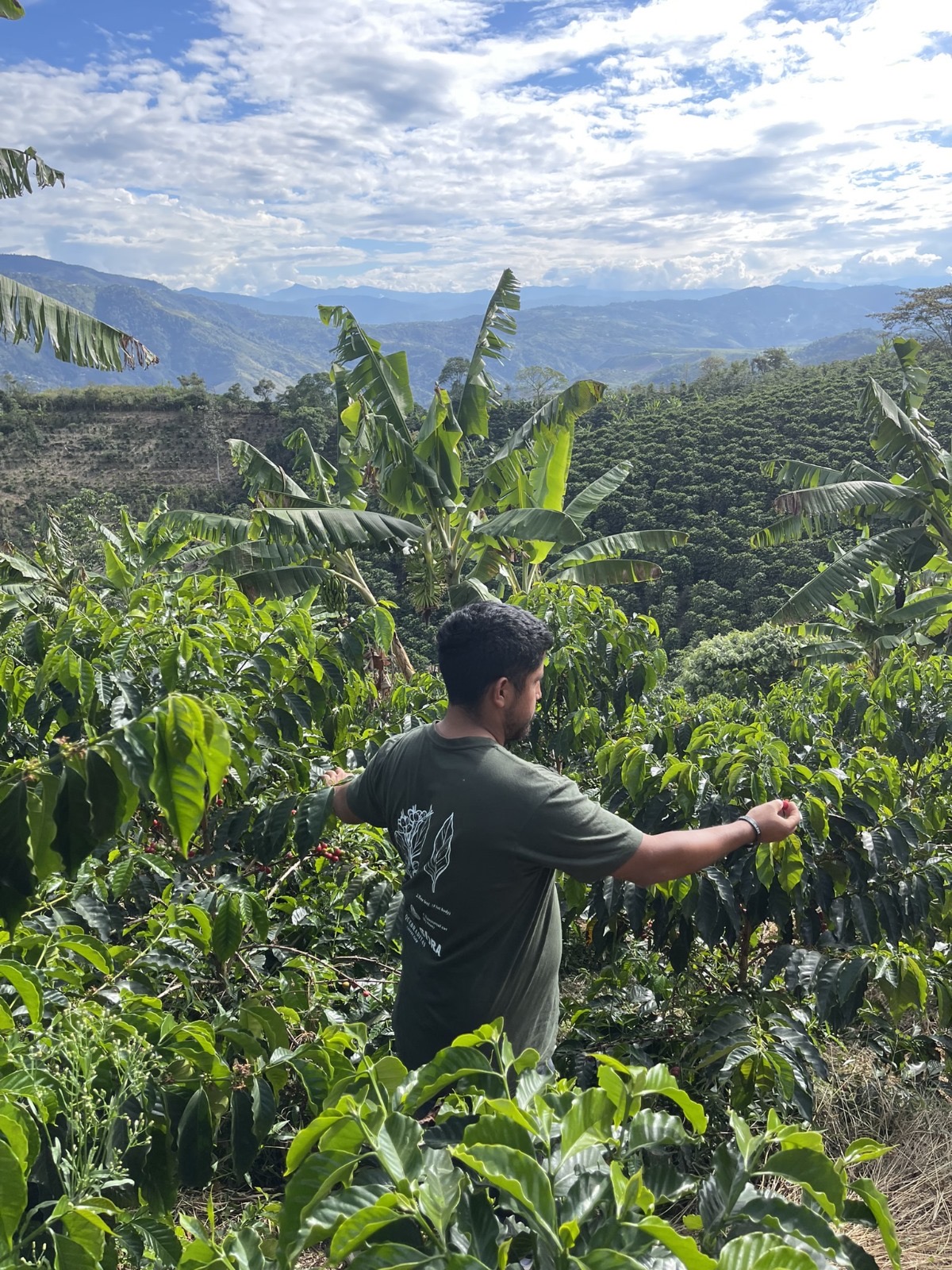
RegionHuila, Oporapa, Alto Caparrosa
FarmQuebraditas Coffee Farm
Altitude1 650 -1 800 m.n.m.
Size of the farm10 ha
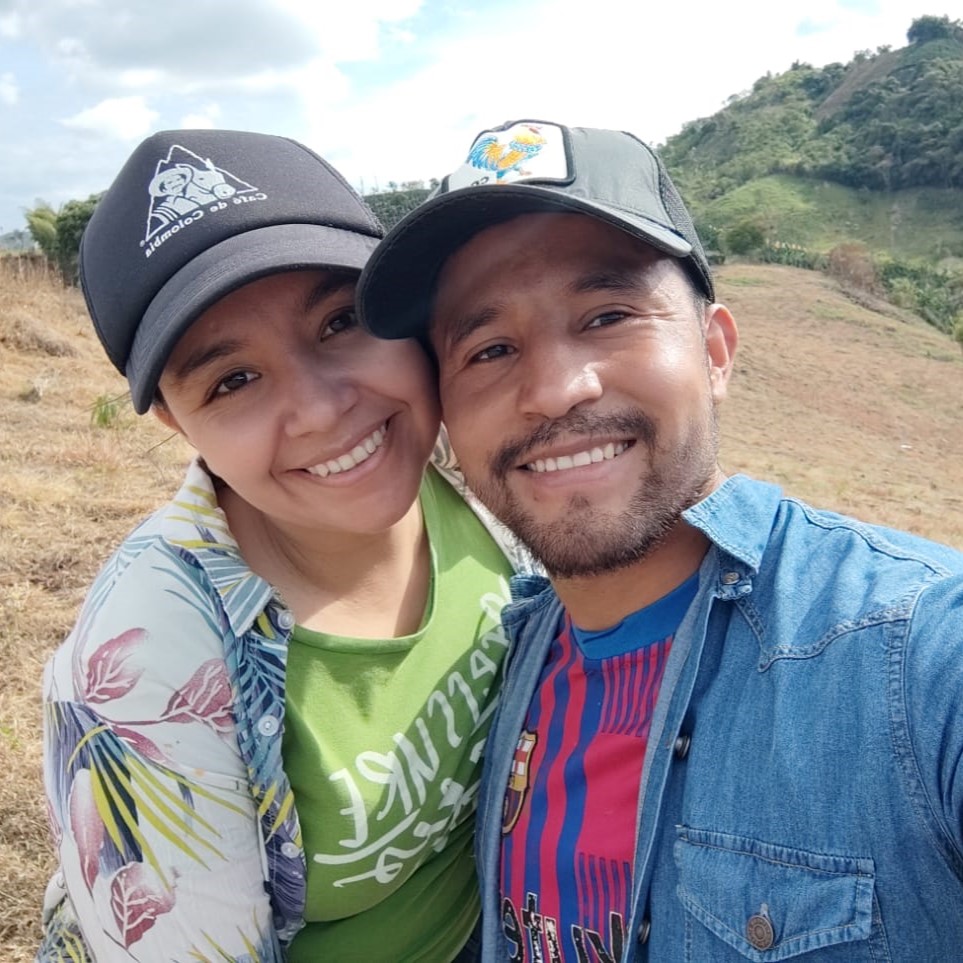
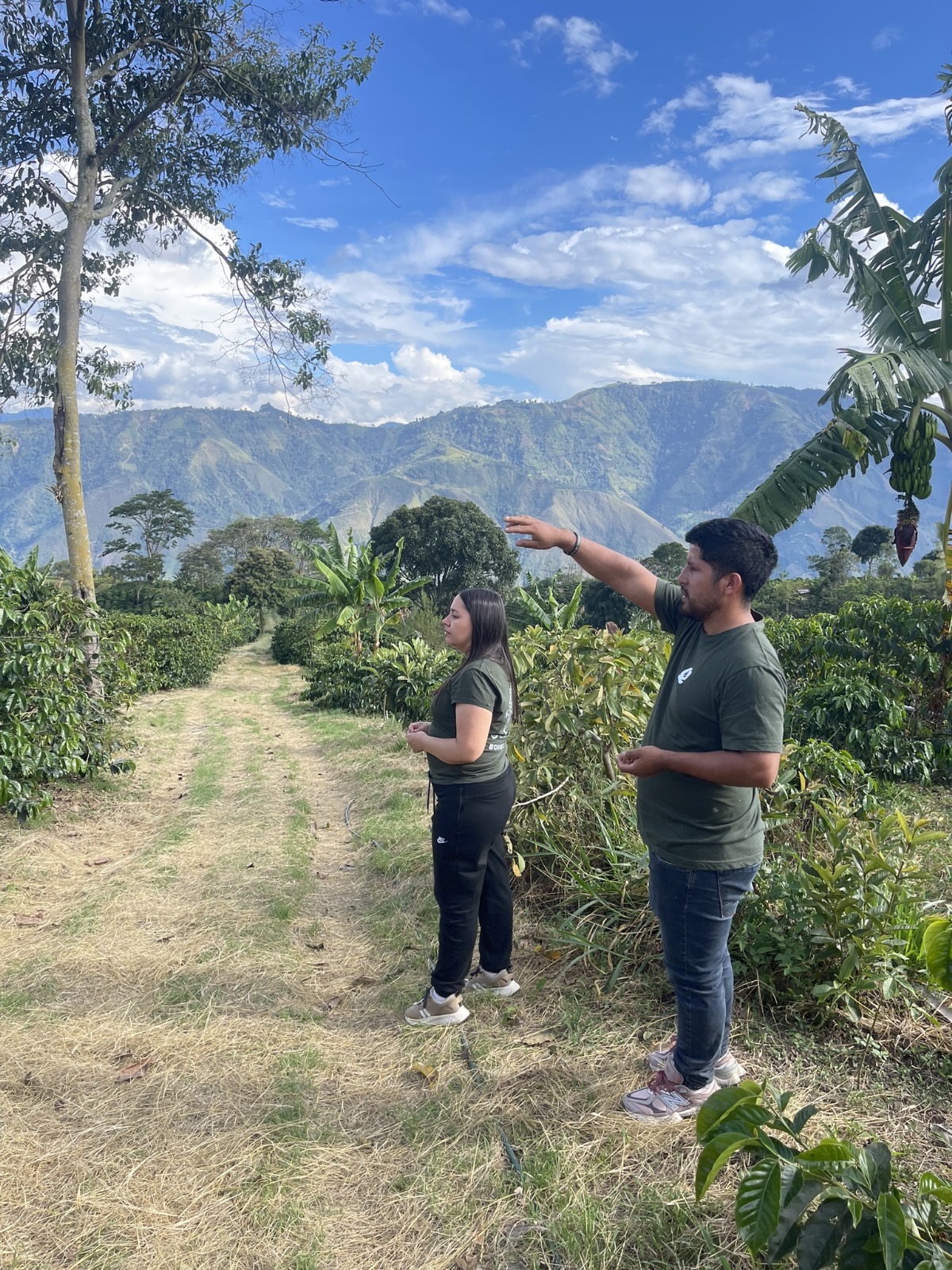
In 2024, Edinson Argote and Ángela Rojas joined forces to create the Quebraditas project, which includes two farms – Chorro Alto and Quebraditas. Ángela, originally a nurse, and Edinson, who worked in the Cauca region, met and decided to collaborate. Edinson is from San Adolfo, while Ángela is from Oporapa. At the age of 16, Ángela left her home to study nursing in Neiva, where she lived for seven years. She later spent four years in Bogotá but returned home during the COVID-19 pandemic and decided to stay. She left her nursing career and began working in coffee.
We are Quebraditas Coffee Farm, a family-run project dedicated to producing premium coffee with differentiated and reproducible sensory profiles thanks to our fermentation processes including thermal shock and yeast inoculation. In addition, we also focus on agronomic management and soil care (strategic shading, use of organic matter, maintenance of soil pH and calcium) that allows us to increase the potential of each crop.
Oporapa is a region that has not yet gained significant recognition in the coffee world, partly due to infrastructure challenges and other factors. Edinson and Ángela started their journey on Chorro Alto, a farm owned by Ángela’s parents. Ángela manages the administration, while Edinson oversees coffee processing and farm operations. They also collaborate with two other farms – one in La Plata (growing varieties such as Sidra and SL28) and another in the Argentina region. Additionally, they purchase coffee cherries from San Adolfo.
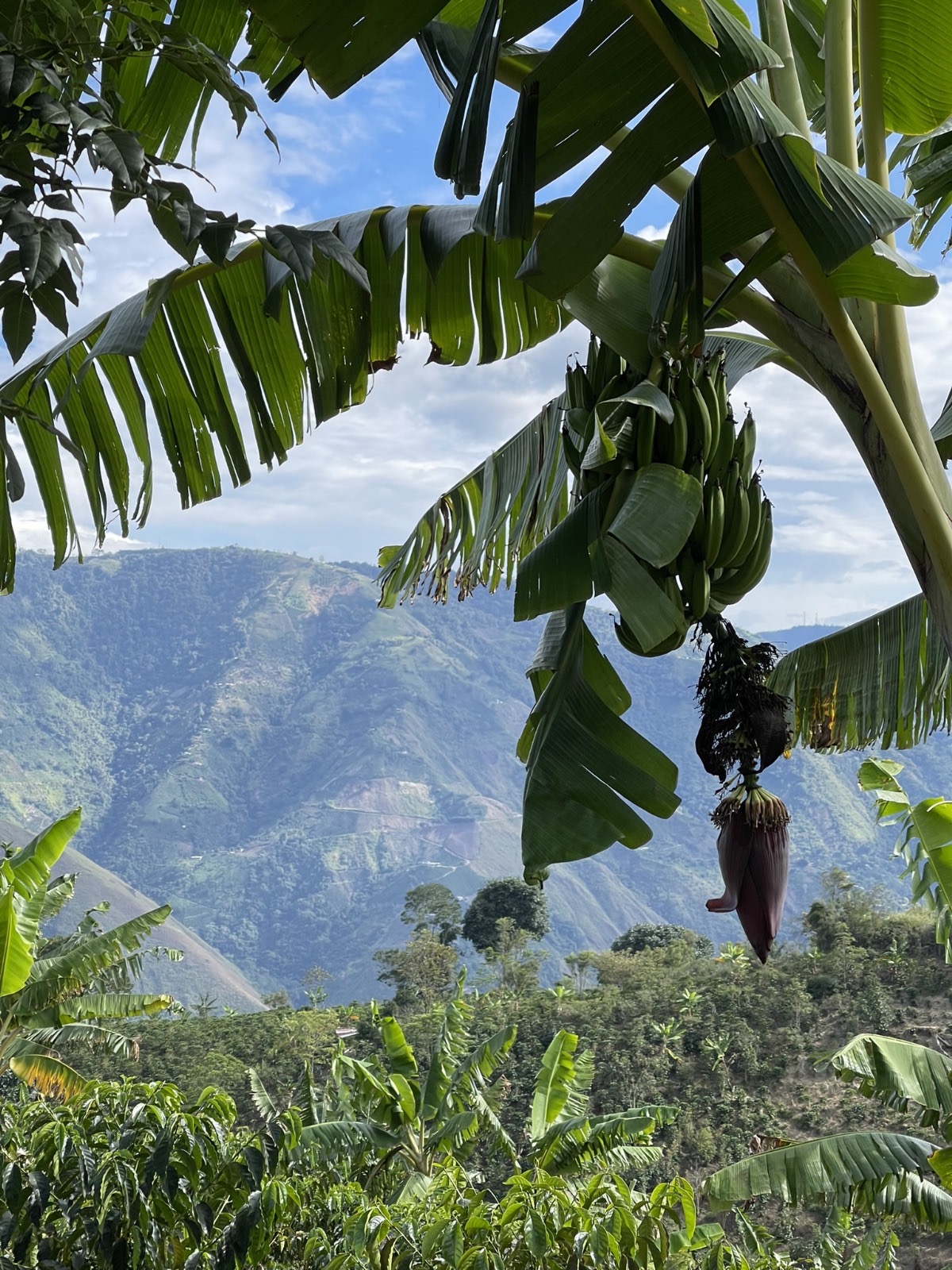
We have 2 coffee farms located at an altitude of 1600 to 1850 m above sea level, in the central Huila Mountains. They have 18 hectares, 10 of which are with traditional varieties such as Caturra, Colombia and others, and one of which we are consolidating exclusively from varieties in which we have the following varieties: Eugenoides, Bourbon Pointu, Geisha, Java, Bourbon chiroso, Wush Wush, Bourbon Ají, Papayo, Pacamara , Sudan rume, arará and with the vision that in the long term all our land will be in these non-traditional varieties.
The Goal of the Quebraditas Project
The primary goal of the project is to bring visibility to the farm and the entire region. Edinson and Ángela have already started shipping coffees under the names of individual coffee growers to give them recognition and demonstrate that there is a different way to collaborate with coffee producers. They also distribute seeds of varieties like Sidra and Geisha to farmers in the area, where such varieties are scarce.
Previously, nearly 80% of the cherry harvest in the region was sold, with most of it going to the Quindío department. Now, Edinson and Ángela focus on collecting cherries from specific varieties and improving processing methods.
The Future of Chorro Alto Farm
Edinson and Ángela plan to improve the infrastructure of Chorro Alto, which is currently very basic and labor-intensive. Their goal is not only to enhance coffee quality but also to support the local community and raise awareness about Oporapa as a significant coffee-growing region.
The Quebraditas project is an example of how passion, hard work, and innovation can transform not only a farm but an entire community.
About the coffee
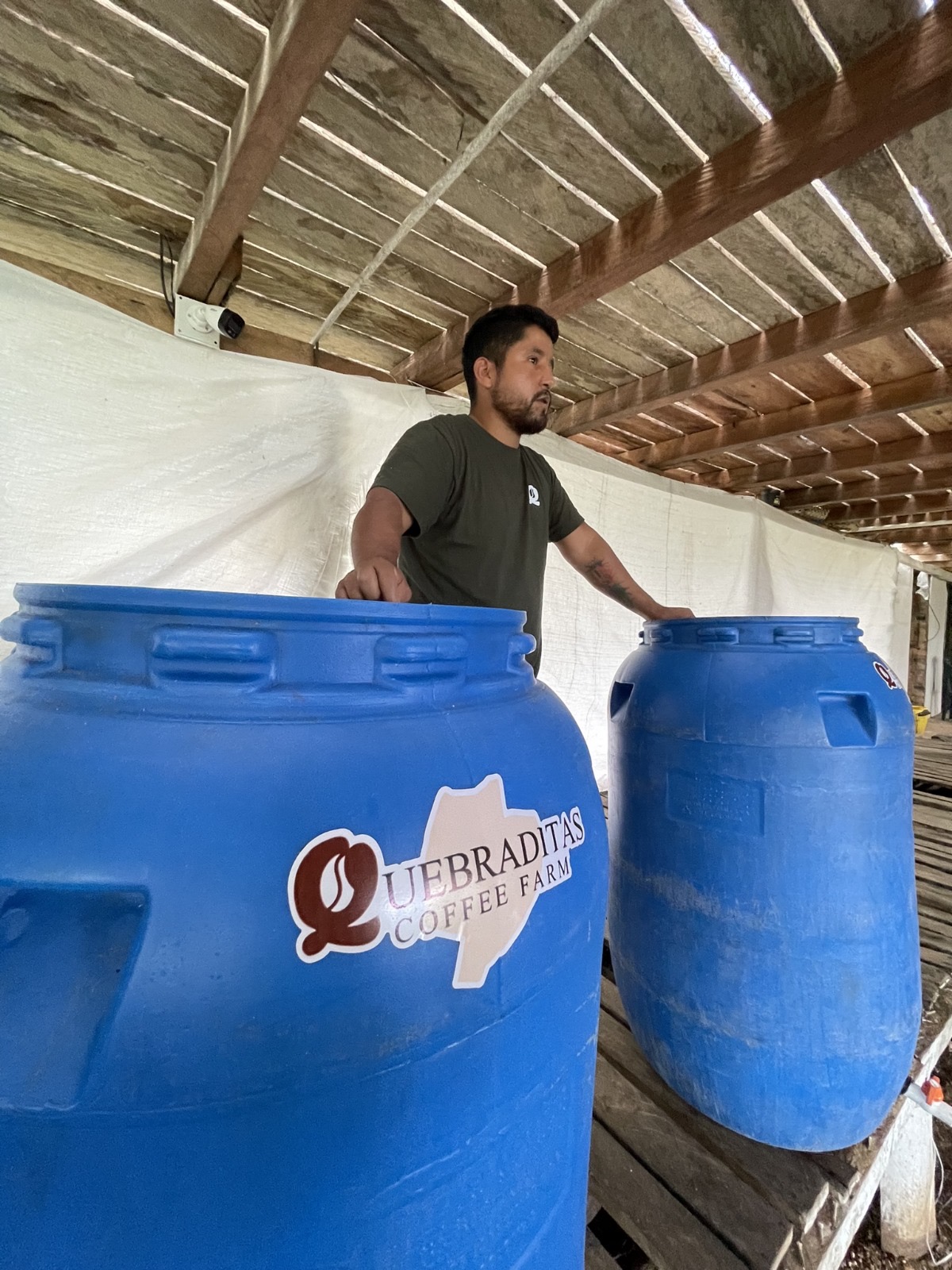
Edinson a is highly curious person and that reflect more than anything in his progressive approach to coffee processing. On the Chorro Alto farm, which was previously used as pastureland, there is now a processing facility where all the coffees are processed and dried. If sun-drying is not possible, a drying silo is used.
Coffee Processing Methods:
- Traditional Line: Classic washed processes with various coffee varieties.
- Experimental Line: Processes involving thermal shock and the addition of purchased microorganisms.
- Fruit Line: Fruit infusions. Ripe cherries are washed, fermented overnight, and then a mixture of pre-cooked fruits (e.g., peach infusion) is added. Fermentation lasts for several days, after which the coffee is washed and dried.
- Washed Processes: Ripe cherries are washed, fermented overnight in open tanks, and then washed again. After washing, they are transferred to tanks where hot water (up to 60°C) is poured over them. Once the water cools to around 30°C, microorganisms initialized with sugar are added. Fermentation lasts for several days, after which the coffee is washed and dried.
- Natural Processes: Ripe cherries are collected, washed, and dried for approximately 20 days until the moisture content reduces to 15–20%. They are then transferred to baskets, where hot water (up to 60°C) is poured over them. Once the water cools to 30°C, microorganisms are added, and fermentation continues.
We process coffee in both traditional and experimental ways. We use thermal shocks, we inoculate the coffee with yeast, or simply wash and dry the beans.
Quebraditas Caturra W
The cherries are harvested to ensure that at least 80% of them are fully ripe, guaranteeing the desired quality. After harvesting, the coffee undergoes a process called “float,” where unripe, overripe, and dry cherries are removed by sorting them in water.
The cherries are then oxidized in food-grade plastic containers for 24 hours. Following this, the skin of the cherries is removed through a dry depulping process that does not require excess water. After depulping, the coffee is subjected to oxidation at 45°C, creating a thermal shock. This step removes 80% of the mucilage, making it easier to wash the coffee.
Fermentation is carried out aerobically for 24 hours at temperatures below 25°C. Specific strains of food-grade yeast are added during this stage to enhance the process. Once fermentation is complete, the coffee is dried mechanically for 76 hours at an average temperature of 40°C.
Finally, the coffee is stabilized in GrainPro bags to maintain its quality until it is ready for further processing or export.
Quebraditas SL28 N
Variety: SL 28
1. Harvesting: The cherries are picked ensuring a minimum of 80% ripe cherries.
2. Floating: This step removes unripe, overripe, and dry cherries.
3. Processing: Double fermentation is applied. The initial fermentation lasts 72 hours, followed by drying for 12 days until the coffee reaches 20% moisture content. It is then rehydrated for 4 days using specific yeast.
4. Drying: After the second fermentation, the coffee is dried for 76 hours at an average temperature of 40°C.
5. Stabilization: The coffee is stabilized in grainpro bags.
Quebraditas Chiroso N
1. Harvesting: Making sure that at least 80% of the picked cherries are fully ripe.
2. Floating: This step guarantees the removal of unripe, overripe, and dried cherries.
3. Processing: NATURAL – Double fermentation. The initial fermentation lasts 60 hours, then the coffee is dried for approximately twelve days until it reaches 20% moisture. It is then rehydrated with “mosto” for 4 days with specific yeast.
4. Drying: After the second fermentation, the coffee is dried for 76 hours at an average temperature of 40°C.
5. Stabilization: The coffee is stabilized in GrainPro-type bags.
Quebraditas Týpica mejorado
1. Harvesting: Making sure that at least 80% of the picked cherries are fully ripe.
2. Floating: This step guarantees the removal of unripe, overripe, and dried cherries.
3. Oxidation: Performed in food-grade plastic containers for 12 hours.
4. Depulping: The cherries are dry depulped.
5. Post-depulping oxidation: The oxidation takes 24 hours and is finished by washing the coffee in a water of 45°C creating a “thermal shock”. About 80% of the mucilage is removed here.
6. Fermentation: Carried out aerobically for 36 hours at temperatures below 25°C with specific yeast.
7. Mechanical drying: After 36 hours of fermentation, the coffee is mechanically dried for 76 hours at an average temperature of 40°C.
8. Stabilization: The coffee is stabilized in GrainPro-type bags.
Quebraditas Sidra N
- Harvesting: Making sure that at least 80% of the picked cherries are fully ripe.
- Floating: Guarantees the removal of unripe, overripe, and dried cherries.
- NATURAL – Double fermentation. The initial fermentation lasts 72 hours, followed by drying for approximately twelve days until the beans reach 20% moisture. The coffee is then rehydrated with “mosto” at 60°C (thermal shock) for 4 days with specific yeast, where the second fermentation happens.
- Drying: After the second fermentation, the coffee is dried for 76 hours at an average temperature of 40°C. All without removing the pulp and skin, thus natural.
- Stabilization: The coffee is stabilized in GrainPro-type bags.
Quebraditas Chiroso W
1. Harvesting: Making sure that at least 80% of the picked cherries are fully ripe.
2. Floating: This step removes unripe, overripe, and dried cherries.
3. Oxidation: Conducted in food-grade plastic barrels for 12 hours.
4. Depulping: The cherries are depulped dry (technique where no or almost no water is used for the de-pulping).
5. Fermentation: It is an “aerobic” fermentation (oxidation). It takes 48 hours and is finished by washing the coffee in a water of 45°C creating a “thermal shock”.
6. Mechanical Drying: After 48 hours of fermentation, the coffee is mechanically dried for 76 hours at an average temperature of 40°C.
7. Stabilization: The coffee is stabilized in GrainPro-type bags.
Quebraditas Sidra W
- Harvesting: Making sure that at least 80% of the picked cherries are fully ripe.
- Floating: This step removes unripe, overripe, and dry cherries.
- Oxidation: Conducted in food-grade plastic barrels for 16 hours.
- Depulping: The cherries are depulped dry (technique where no or almost no water is used for the de-pulping).
- Post-depulping oxidation: The oxidation takes 24 hours and is finished by washing the coffee in a water of 45°C creating a “thermal shock”. About 80% of the mucilage is removed here.
- Maceration: We macerate the pulp from Geisha, Sidra, and Pink Bourbon varieties as a “starter culture”, then we inoculate it with Hybrid Saccharomyces cerevisiae x Saccharomyces bayanus yeast.
- Fermentation: We ferment the coffee in the macerate. An anaerobic fermentation takes place over 36 hours at temperatures below 25°C.
- Drying: After fermentation, the coffee is dried for 76 hours at average temperatures of 40°C.
- Stabilization: The coffee is stabilized in GrainPro-type bags.
Quebraditas Geisha W
Harvesting: Making sure that at least 80% of the picked cherries are fully ripe.
Floating: This step removes unripe, overripe, and dry cherries.
Oxidation: Conducted in food-grade plastic barrels for 12 hours.
Depulping: The cherries are depulped dry (without using water).
Fermentation: The coffee is fermented for a total of 96 hours with the addition of yeast microorganisms, followed by a thermal shock.
Drying: After fermentation, the coffee is dried for 76 hours at average temperatures of 40°C.
Stabilization: The coffee is stabilized in GrainPro-type bags.
Quebraditas Pink Bourbon W
Harvesting: Making sure that at least 80% of the picked cherries are fully ripe.
Floating: This step removes unripe, overripe, and dry cherries.
Oxidation: Conducted in food-grade plastic barrels for 16 hours.
Depulping: The cherries are depulped dry (without using water).
Fermentation: The coffee is fermented for a total of 72 hours with the addition of yeast microorganisms, followed by a thermal shock.
Drying: After fermentation, the coffee is dried for 76 hours at average temperatures of 40°C.
Stabilization: The coffee is stabilized in GrainPro-type bags.
Quebraditas Maragesha W
Harvesting: Making sure that at least 80% of the picked cherries are fully ripe.
Floating: This step removes unripe, overripe, and dry cherries.
Oxidation: Conducted in food-grade plastic barrels for 24 hours.
Depulping: The cherries are depulped dry (without using water).
Fermentation: The coffee is fermented for a total of 72 hours with the addition of yeast microorganisms, followed by a thermal shock.
Drying: After fermentation, the coffee is dried for 76 hours at average temperatures of 40°C.
Stabilization: The coffee is stabilized in GrainPro-type bags.
Quebraditas Orange Bourbon W
Harvesting: Making sure that at least 80% of the picked cherries are fully ripe.
Floating: This step removes unripe, overripe, and dry cherries.
Fermentation (two phases): Oxidation is conducted in food-grade plastic barrels for 36 hours. The cherries are then depulped dry (without using water). Fermentation continues for a total of 48 hours with a specific yeast strain and a “starter” made from citrus fruits (a mix of fruits and juices containing microorganisms that significantly influence fermentation and the final coffee flavor).
Drying: After fermentation, the coffee is dried for 76 hours at average temperatures of 40°C.
Stabilization: The coffee is stabilized in GrainPro-type bags.
Quebraditas Ombligon N
Harvesting: Making sure that at least 80% of the picked cherries are fully ripe.
Floating: This step removes unripe, overripe, and dry cherries.
Double Fermentation: The initial fermentation lasts 48 hours. Then the coffee is dried until it reaches 20% moisture. A rehydration follows for 4 days with specific yeast strains (second slow fermentation).
Drying: After fermentation, the coffee is dried for 76 hours at average temperatures of 40°C.
Stabilization: The coffee is stabilized in GrainPro-type bags.
Quebraditas Cinnamon
Harvesting: Making sure that at least 80% of the picked cherries are fully ripe.
Floating: This step removes unripe, overripe, and dry cherries.
Fermentation (two phases): Oxidation is conducted in food-grade plastic barrels for 24 hours. The cherries are then depulped dry (without using water). Fermentation continues for a total of 48 hours with the addition of a specific yeast strain and cinnamon.
Drying: After fermentation, the coffee is dried for 76 hours at average temperatures of 40°C.
Stabilization: The coffee is stabilized in GrainPro-type bags.
Quebraditas Coconut
Harvesting: Making sure that at least 80% of the picked cherries are fully ripe.
Floating: This step removes unripe, overripe, and dry cherries.
Fermentation (two phases): Oxidation is conducted in food-grade plastic barrels for 24 hours. The cherries are then depulped dry (without using water). Fermentation occurs with the beans submerged in a liquid (mix of water and fermentation juice) for a total of 72 hours, with added yeast and coconut.
Drying: After fermentation, the coffee is dried for 76 hours at average temperatures of 40°C.
Stabilization: The coffee is stabilized in GrainPro-type bags.
Quebraditas Grape W
Harvesting: Making sure that at least 80% of the picked cherries are fully ripe.
Floating: This step removes unripe, overripe, and dry cherries.
Fermentation (two phases): Oxidation is conducted in food-grade plastic barrels for 36 hours. The cherries are then depulped dry (without using water). Fermentation continues for a total of 72 hours with the addition of yeast and grape wine (a mix of fruits and juices containing microorganisms that significantly influence fermentation and the final coffee flavor).
Drying: After fermentation, the coffee is dried for 76 hours at average temperatures of 40°C.
Stabilization: The coffee is stabilized in GrainPro-type bags.
Quebraditas Kiwi Lulo
Harvesting: Making sure that at least 80% of the picked cherries are fully ripe.
Floating: This step removes unripe, overripe, and dry cherries.
Fermentation (two phases): Oxidation is conducted in food-grade plastic barrels for 24 hours. The cherries are then depulped dry (without using water). Fermentation occurs with the beans submerged in a liquid (mix of water and fermentation juice) for a total of 72 hours, with added yeast, dried kiwi, and lulo.
Drying: After fermentation, the coffee is dried for 76 hours at average temperatures of 40°C.
Stabilization: The coffee is stabilized in GrainPro-type bags.
Quebraditas Lemongrass
Harvesting: Making sure that at least 80% of the picked cherries are fully ripe.
Floating: This step removes unripe, overripe, and dry cherries.
Fermentation (two phases): Oxidation is conducted in food-grade plastic barrels for 24 hours. The cherries are then depulped dry (without using water). Fermentation occurs with the beans submerged in a liquid (mix of water and fermentation juice) for a total of 72 hours, with added yeast and lemongrass.
Drying: After fermentation, the coffee is dried for 76 hours at average temperatures of 40°C.
Stabilization: The coffee is stabilized in GrainPro-type bags.
Quebraditas Peach
Harvesting: Making sure that at least 80% of the picked cherries are fully ripe.
Floating: This step removes unripe, overripe, and dry cherries.
Fermentation (two phases): Oxidation is conducted in food-grade plastic barrels for 36 hours. The cherries are then depulped dry (without using water). Fermentation continues for a total of 72 hours with the addition of yeast and peach (a mix of fruits and juices containing microorganisms that significantly influence fermentation and the final coffee flavor).
Drying: After fermentation, the coffee is dried for 76 hours at average temperatures of 40°C.
Stabilization: The coffee is stabilized in GrainPro-type bags.
Quebraditas Red Fruits
Harvesting: Making sure that at least 80% of the picked cherries are fully ripe.
Floating: This step removes unripe, overripe, and dry cherries.
Fermentation (two phases): Oxidation is conducted in food-grade plastic barrels for 36 hours. The cherries are then depulped dry (without using water). Fermentation continues for a total of 72 hours with the addition of yeast and red fruits (a mix of fruits and juices containing microorganisms that significantly influence fermentation and the final coffee flavor).
Drying: After fermentation, the coffee is dried for 76 hours at average temperatures of 40°C.
Stabilization: The coffee is stabilized in GrainPro-type bags.