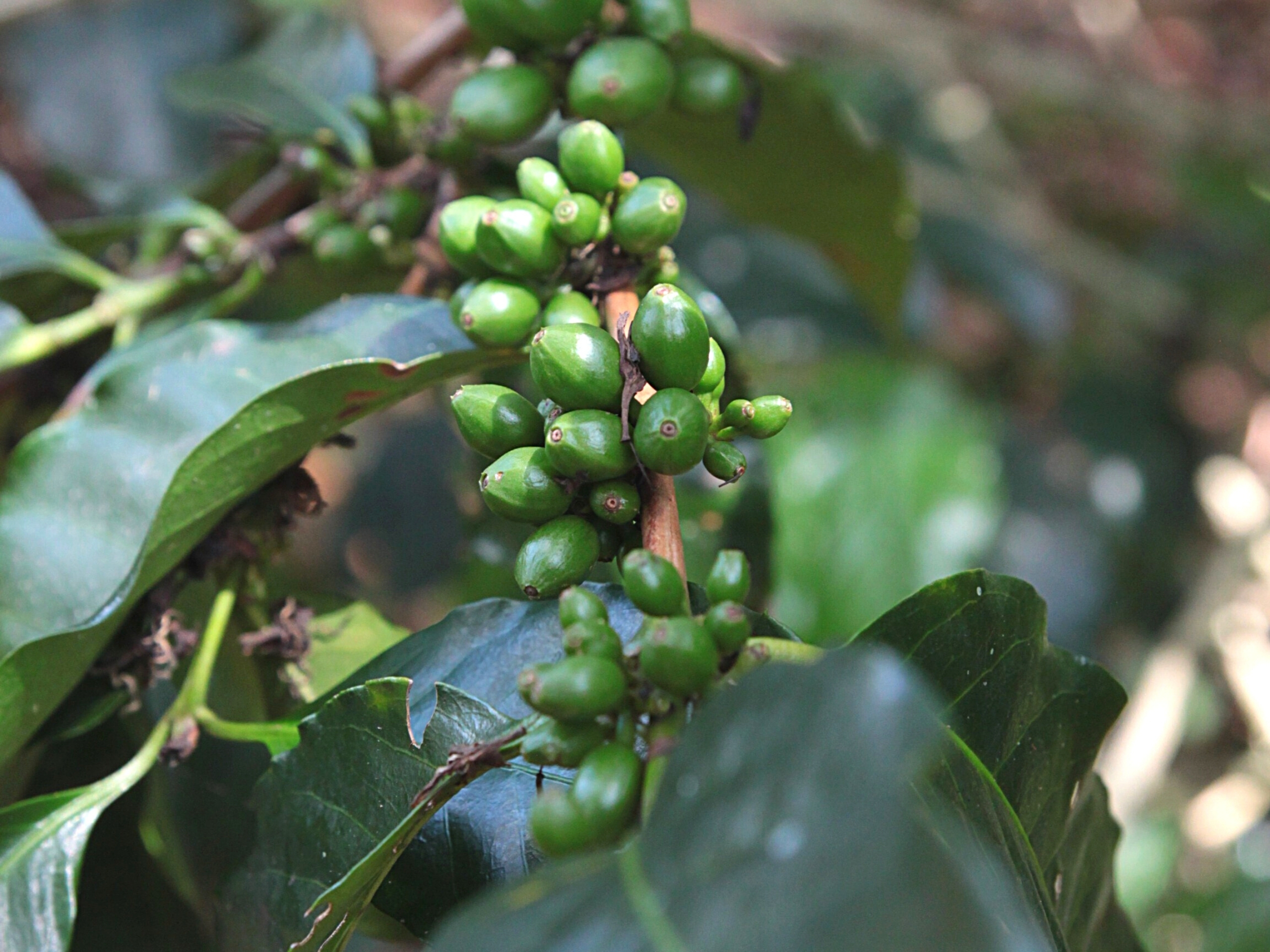
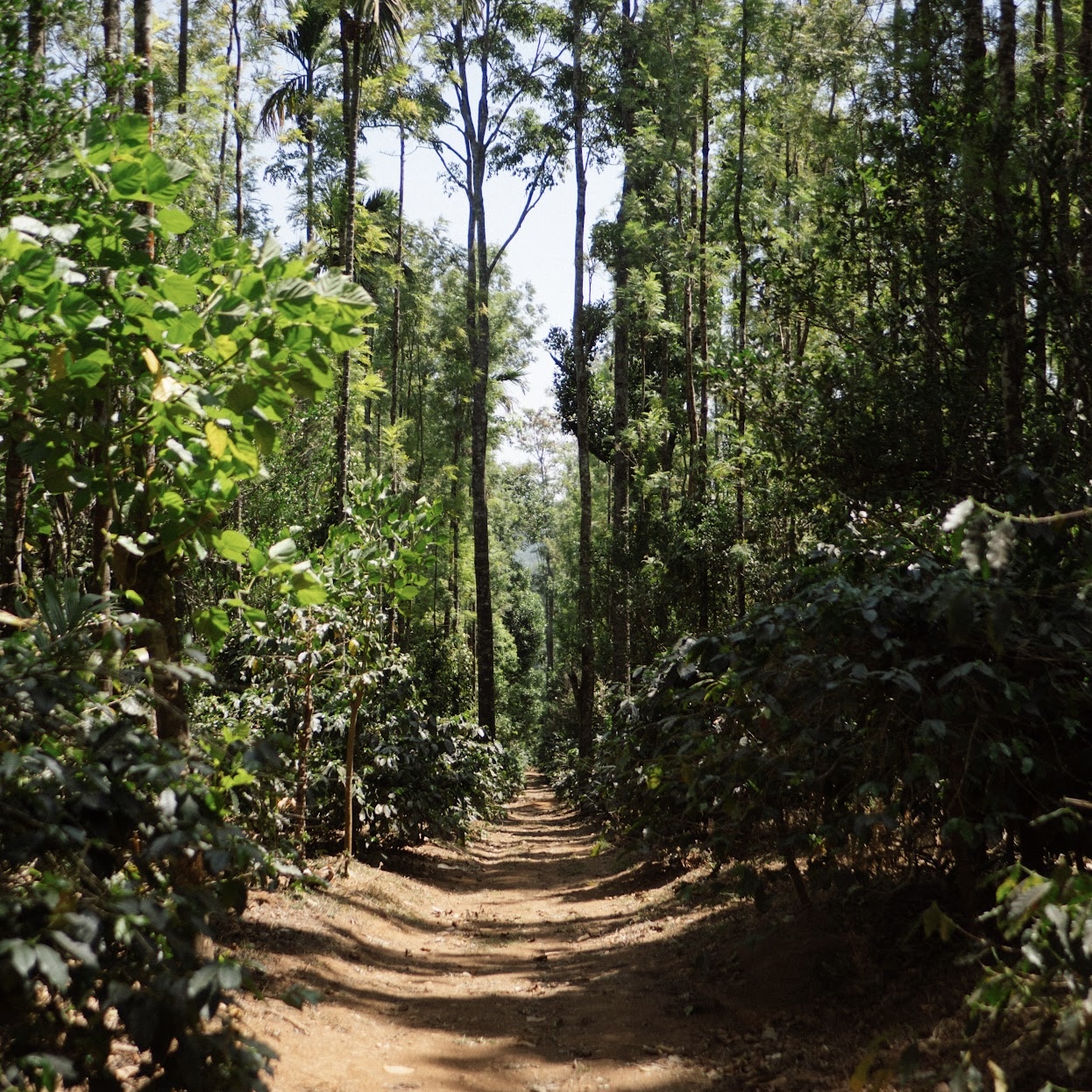
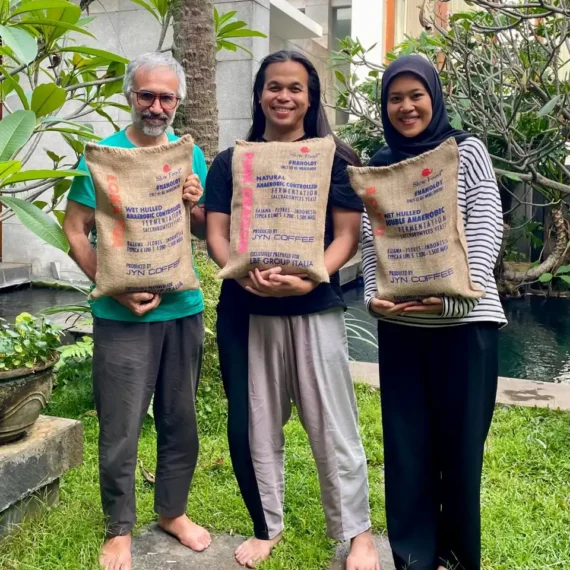
Our partner farms cultivate both traditional Indian Arabica varieties and cultivars that have been introduced to India from other coffee-growing regions around the world. Many of these varieties were developed through breeding programmes aimed at improving disease resistance, adapting plants to local growing conditions, or enhancing cup quality.
Among the most significant Indian varieties is S795, developed in the 1940s from breeding material introduced from Kenya. It remains one of India’s most widely cultivated Arabica varieties, valued for its reliability, adaptability, and well-balanced cup profile. Another important variety is SLN9, developed at the Coffee Research Station in Balehonnur as a cross between Ethiopian Tafarikela and Hybrido de Timor. Considered one of the newer Indian cultivars, it is recognised for its excellent cup quality. Chandragiri is another notable Indian variety, bred as a more disease-resistant alternative to Kent. Thanks to its high yield potential and quality, it has become increasingly common on Indian coffee farms in recent years.
Alongside these Indian varieties, many of our partner farms are also cultivating internationally recognised cultivars such as Geisha, Bourbon, Catuai, as well as other experimental varieties. The selection of cultivars varies between farms and evolves from harvest to harvest, reflecting each producer’s decisions and the ongoing development of Indian specialty coffee.