

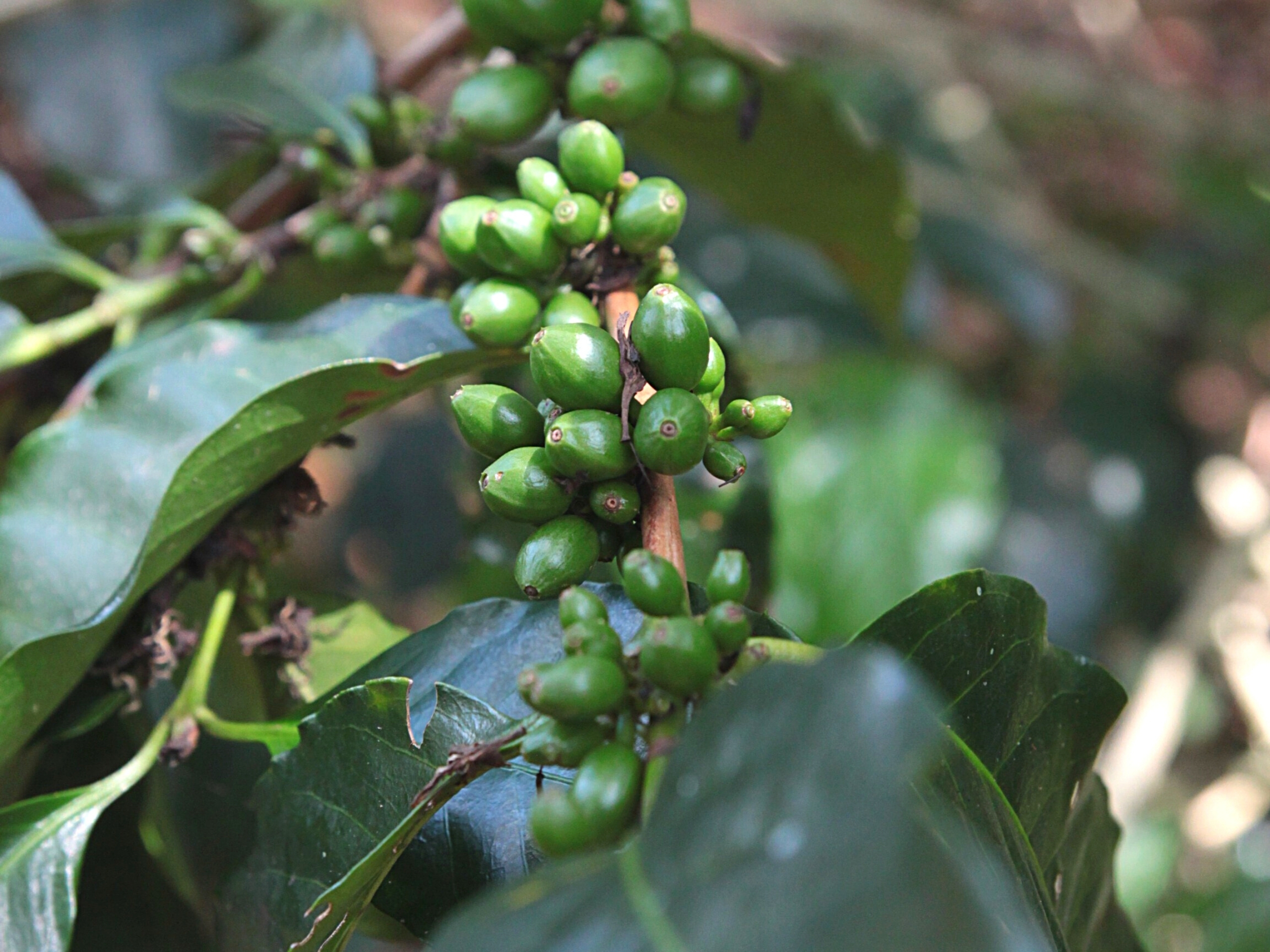
Bajawa, Flores – JYN Group
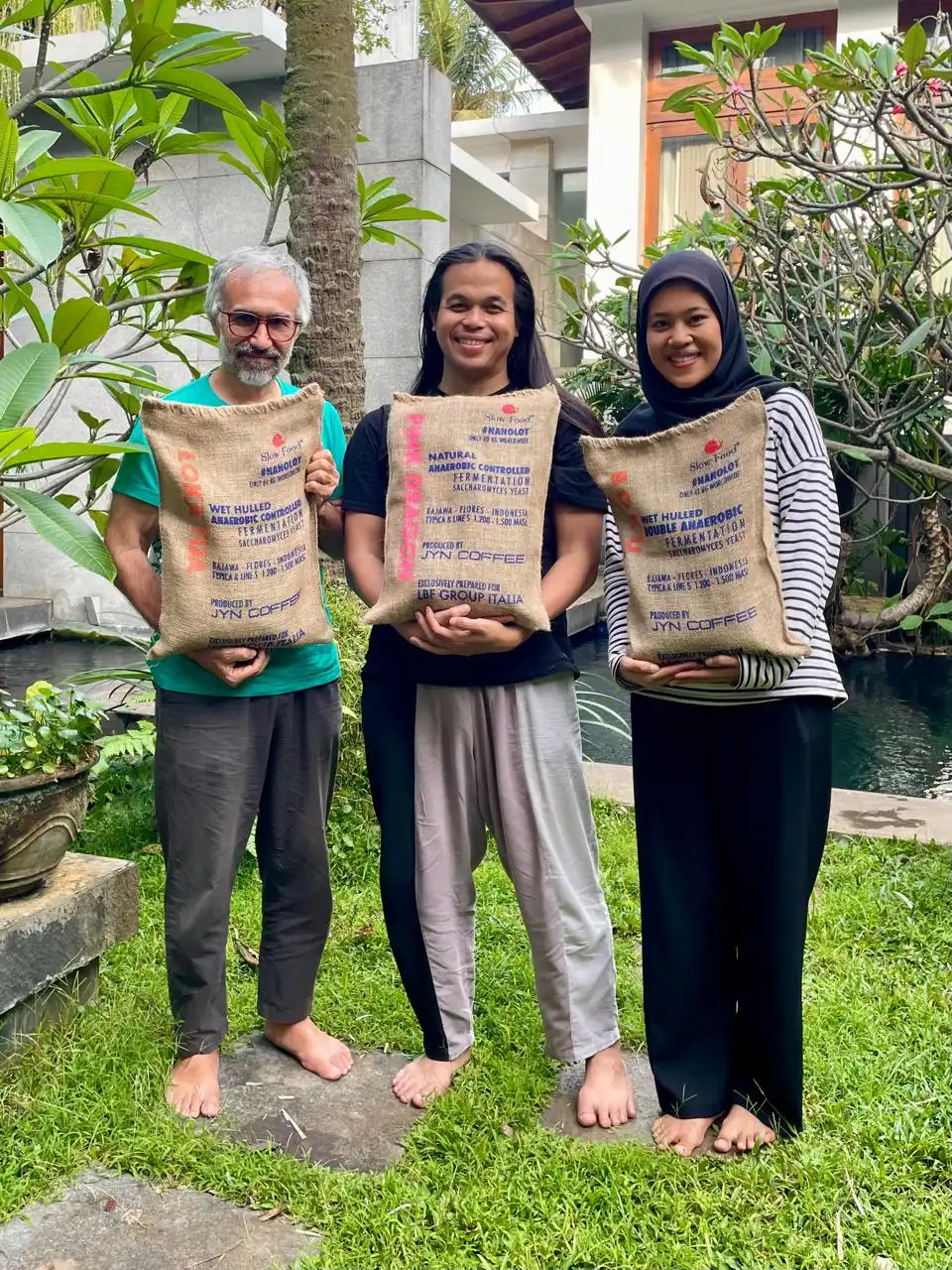
CountryIndonesia
RegionBajawa, Flores
FarmCollectives of small farmers under the leadership of JYN Group Indonesia
Altitude1 200–1 500 MASL
Size of the farm1 - 3 ha
The volcanic region of Bajawa on the island of Flores is among Indonesia’s most interesting coffee regions. Arabica is grown here on the slopes of three active volcanoes – Inerie, Wolobobo, and Ebulobo. It is precisely their mineral-rich soil that gives the local coffee its distinctive sweetness, full body, and typical character. Nevertheless, arabica is grown here on a relatively small area and production remains limited.
Bajawa - coffee from the rainforest
Coffee plants grow here almost wild in the middle of the forest. Local farmers give nature plenty of space and intervene in cultivation only minimally. Thanks to this, natural cross-breeding of individual varieties has been occurring here for generations, which gives rise to unique genetic diversity.
Most growers operate on small plots of approximately one hectare in size. Many of them are part of the traditional tanah adat system – communal land that is inherited between generations and cannot be sold. Some plantations are even located in protected forests, where coffee cultivation is permitted only on the condition that the original mature trees remain preserved. Thanks to this, a unique connection between coffee production and nature conservation is happening.
About the coffee
Harvesting is done by hand, and only perfectly ripe cherries are selected. These are then spread out on bamboo drying terraces, where they dry naturally in the sun for approximately four weeks. During this time, the cherries are regularly turned to ensure even drying.
Slow drying allows the fruit pulp to gradually impart pronounced sweetness and complex fruity aroma to the beans. Only after complete drying the skin is removed and the beans are ready for further sorting and export. The result is a coffee with a rich, clean and elegant profile that beautifully reflects the character of the volcanic landscape of Flores.
ID-26-081
Bajawa washed
Manual harvesting of ripe cherries.
Depulping within a few hours of harvest.
Fermentation in water: 12–36 hours (depending on microclimate).
Rinsing to remove mucilage residue.
Drying on terraces to target moisture content.
ID-26-082
Bajawa natural
Manual harvesting of fully ripe cherries only
Drying of whole cherries on bamboo terraces in direct sunlight
Drying lasts up to four weeks
During this time, slow natural fermentation of the pulp occurs, which imparts sweetness and complex fruity notes to the bean.
Farmers regularly turn the cherries for even drying
After complete drying the skin and dried pulp are removed (dry hulling)


